
A single successful product is a launch. A range that can grow without losing its shape is a brand. Architecture is what makes the difference.
What architecture means on pack
Brand architecture is the logic that connects products to each other and to the brand. On the shelf it becomes visible as structure: what stays constant across the range, what changes from one variant to the next and how a shopper finds the one they want.
Start with the portfolio, not the pack
It is tempting to design the hero product first and extend later. Systems built that way tend to strain as soon as the range grows. We prefer to understand the whole portfolio first, including products that do not exist yet, and then design the first pack so the others have room.
- Which products belong together, and which need their own identity?
- What do shoppers use to tell variants apart: flavour, size, benefit or format?
- Which elements must stay fixed for the brand to be recognised at a distance?
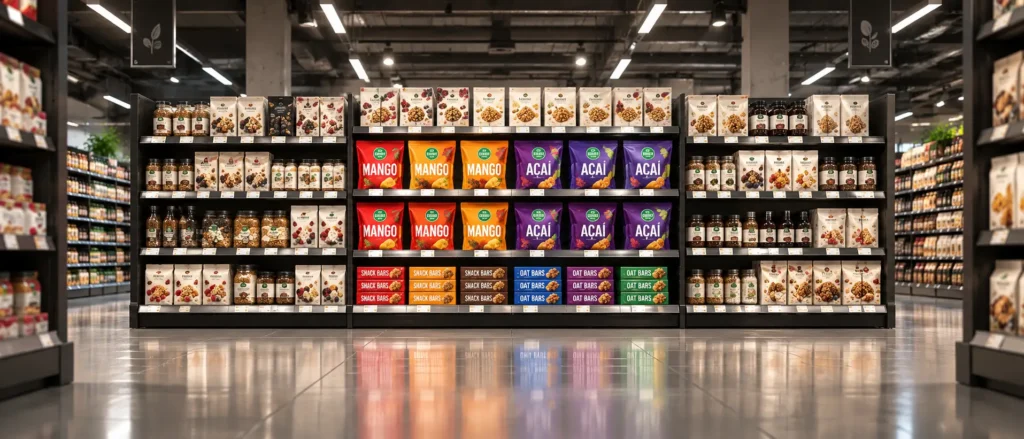
Flavour, variant and range cues
Good systems give variants a clear and consistent signal. Colour is the most common one, but it is rarely enough on its own. Position, typography, imagery and naming can all carry information, provided each has one job and the rules are applied the same way every time.
“A system should make the tenth product as easy to understand as the first.”
Designing for growth
Growth does not mean adding more rules. It means building a small set of flexible ones, then testing them against products that stretch the range: a new size, a new category or a new market.
- Map the current range and the likely next three additions.
- Define the fixed brand elements and the variable ones.
- Test the system on the most awkward product, not the easiest.
A packaging system that holds up under that pressure is one that can keep growing without being redesigned every time the range does.